Pelvic Floor Support Systems in Postpartum Recovery, Pelvic Pain and Prolapse
On-Demand Courses
13.25 Contact Hours
Pelvic Floor Support Systems: Advanced Anatomy, Assessment & Treatment for Prolapse & Parous Populations
This intermediate to advanced pelvic health continuing education course is designed for clinicians who want a deeper, clearer understanding of pelvic organ prolapse, postpartum support changes, and treatment including pessary‑related clinical decision‑making. You will learn to recognize factors that influence treatment success—including levator ani (LA) avulsion, fascial support deficits, and overall support system integrity.
Through clear, step‑by‑step lectures and examination videos, you’ll learn internal vaginal evaluation techniques for anterior, posterior, and apical prolapse. The course covers assessment of perineocele, enterocele, LA avulsion, and POP‑Q landmarks, along with how to visualize support changes using a ½ speculum. You’ll also explore breathing, posture, and abdominal wall assessments to evaluate intra‑abdominal pressure (IAP) management.
Clinicians leave with a stronger, more precise framework for prolapse assessment and improved confidence in vaginal myofascial examination and treatment.
- Lifetime access to online curriculum.
- Detailed pelvic floor fascial anatomy reading/study module and quiz
- Printable Clinical Guides, Patient Education Handout, Slide Shows, and Literature Reviews
- Screening questionnaire for pelvic floor dysfunction in female athletes
- Course comments and questions answered weekly by Kathe
Continuing education requirements for physical therapist licensure are determined by individual state licensing boards and vary by state. Some jurisdictions do not require pre-approval of continuing education activities, while others may allow licensees to submit courses for consideration through an individual review or petition process. It is the responsibility of each licensee to verify current requirements and the applicability of any continuing education activity with their state licensing board.
This course is approved for 13.25 contact hours.
- CA CPTA #25-371 has been approved for 1.325 CEUs from Jan 1, 2026 to Jan 1, 2027.
- NJ #2511-43 valid for 13.25 credits Feb 1, 2026 – Jan 31, 2028
- TX #81076TX approved for 13.25 CCUs from Jan 1, 2026 to Jan 1, 2028
This course is open to practicing pelvic floor physical therapists and physical therapist assistants with prior training in internal examination techniques. Target audience Intermediate to Advanced. The information presented is intended to advance existing knowledge in the field of pelvic floor examination and treatment.
Upon completion of the web-based learning curriculum the participant will be able to:
- Identify three vaginal fascial and levator hiatus support structures that can contribute to Pelvic Floor Dysfunction (PFD).
- Describe two fascial structures in each of Delancey’s three levels of pelvic support.
- List three modifiable conditions that may affect the findings of a vaginal fascial examination.
- Locate and palpate common levator ani injury/avulsion sites (including ATLA, ATFP, ATRV) and state the expected depth and internal landmarks for each site.
- Outline and perform the four-step digital levator ani injury/avulsion examination and interpret key positive and negative findings.
- Explain the seven internal vaginal and two external POP-Q points and demonstrate correct technique for ½‑speculum fascial assessment and external POP-Q measurement (gh, pb).
- Analyze internal and external examination findings to differentiate between muscular, fascial, and support-related contributors to pelvic floor dysfunction, including levator ani avulsion, perineocele, enterocele, anterior, posterior and apical descent.
- Evaluate and formulate differential diagnoses from functional assessment data and apply evidence-based clinical decision-making to select conservative management, pessary fitting, or referral to medical/surgical specialists.
- Differentiate types of pelvic organ prolapse presentations and formulate appropriate conservative management strategies, including criteria for pessary candidacy.
- Evaluate the evidence comparing pessary use combined with lifestyle and movement‑based interventions versus pelvic floor muscle training (PFMT) alone and justify individualized management decisions by recommending when to incorporate pessary therapy alongside exercise and lifestyle strategies.
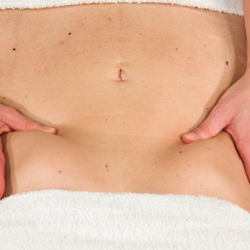
- Describe three abdominal wall evaluation/treatment methods relevant to PFD and apply findings to IAP management during functional activities.
- Summarize four breathing and vocalization strategies (including principles of the Hypopressive technique) and integrate appropriate approaches into individualized treatment plans.
- Apply postural, IAP, and motor control strategies to design functional progressions that support activity retraining for postpartum and athletic clients.
- Develop individualized care plans that synthesize fascial exam findings, levator ani injury assessment, breathing/postural evaluation, and evidence-informed treatment to optimize pelvic floor support and client activity goals.
- Formulate evidence-based clinical decisions regarding conservative management, pessary use, or referral to medical or surgical specialists based on differential diagnosis and functional assessment outcomes.
About the Instructor
 Kathe Wallace, PT, Pelvic Resources
Kathe Wallace, PT, is an internationally recognized clinician, author, and educator specializing in pelvic floor and pelvic health rehabilitation. She is known for her clear, practical teaching style and her ability to translate complex concepts into effective clinical strategies. In 2023 she received the Academy of Pelvic Health Elizabeth Noble Award for her contributions to pelvic health physical therapy education.
Academy of Pelvic Health Physical Therapy members SAVE 10% on this course. Follow the discount link below to access your code. This course listing contains affiliate links. The Academy of Pelvic Health Physical Therapy may earn a commission from purchases made via affiliate links. By clicking on the "Purchase" button below, you will be redirected to the Kathe Wallace website to complete your purchase. This course may not be eligible for other APTA Pelvic Health-run discount promotions.
Non-Member Price: $530